
Ultra Rock Flowers (15)
Ultra Rock Flowers (15)
Couldn't load pickup availability
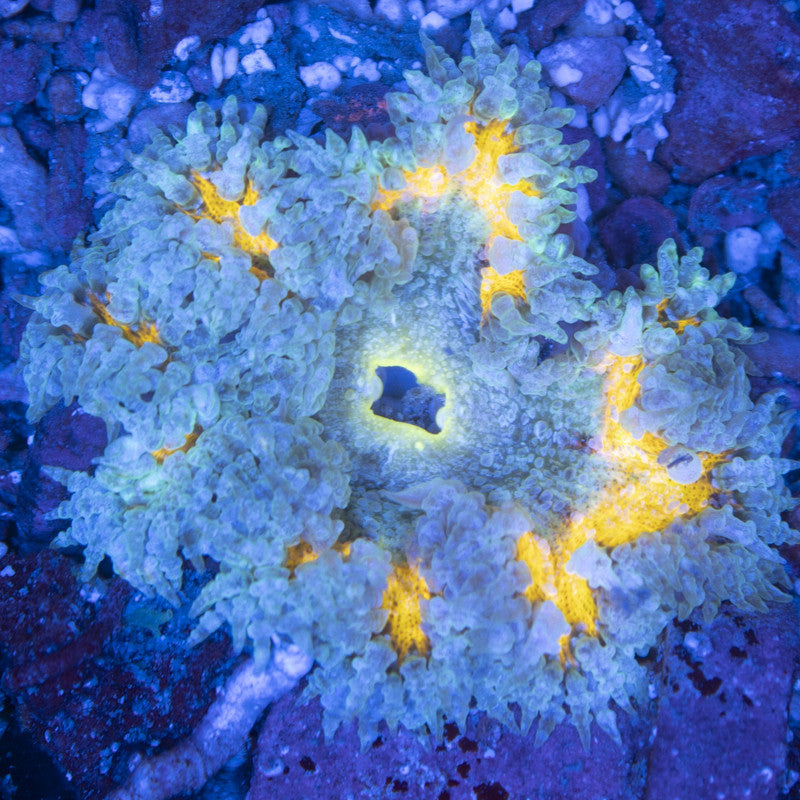
Ultra Rock Flower Anemones are colorful, hardy anemones that add movement and intense color to a saltwater aquarium. Each Rock Flower can vary greatly in pattern and coloration, making every specimen unique.
Rock Flower Anemone Care Guide
- Care Level: Easy to Moderate
- Lighting: Low to Moderate
- PAR: Approximately 50–150 PAR
- Flow: Low to Moderate, indirect
- Placement: Sand bed or lower rockwork
- Salinity: 1.024–1.026 specific gravity
- Temperature: 76–79°F
- Reef Safe: Generally reef safe with appropriate spacing
Placement & Acclimation
Rock Flower Anemones usually settle near the sand bed or into a crevice at the base of the rockwork. Allow the anemone to choose its preferred position rather than repeatedly moving it. New arrivals should be acclimated gradually to stronger reef lighting.
Lighting & Flow
A practical starting range is approximately 50–150 PAR. Provide low to moderate, varied flow that gently moves the tentacles without blasting the anemone directly.
Water Chemistry
Rock Flower Anemones do best in established saltwater aquariums with stable temperature and salinity. Avoid sudden changes in salinity, alkalinity, temperature, or nutrient levels.
Feeding
Rock Flower Anemones benefit from occasional small meaty foods such as mysis shrimp or finely chopped marine foods. Feeding once or twice per week can support healthy growth, but avoid oversized meals or excessive feeding.
Compatibility
Give the anemone enough room that its tentacles are not constantly touching neighboring corals. Rock Flowers are generally much less mobile than many other anemones once they have selected a location.
AquaGemCorals Tip
Do not use standard coral dips on anemones. Once your Rock Flower attaches and settles into a location, stable water conditions and gentle, appropriate flow are usually more important than constantly adjusting its placement.
Share