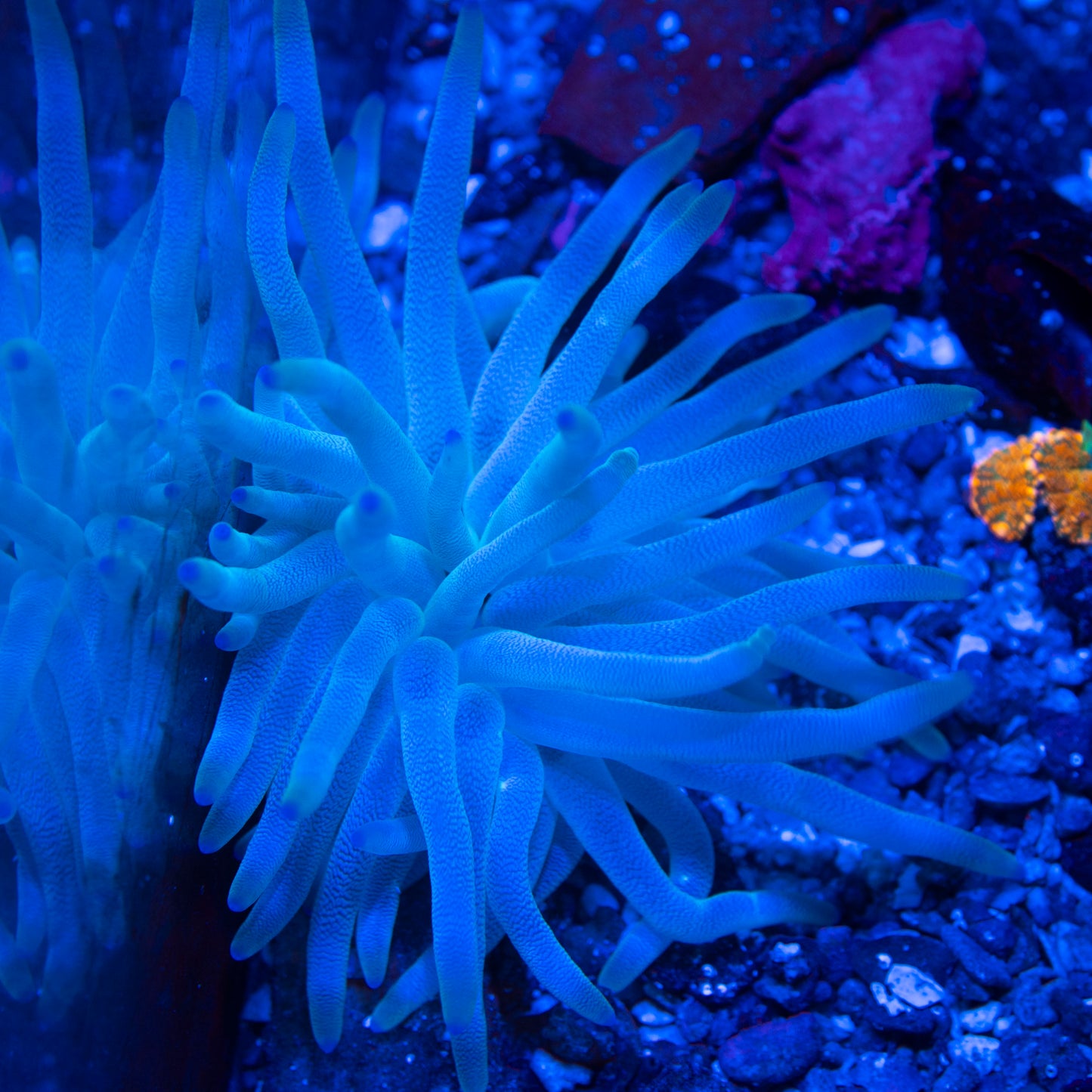

Condylactis Anemone
Condylactis Anemone
Couldn't load pickup availability
The Condylactis Anemone is a striking Caribbean anemone known for its long, flowing tentacles and colorful tips. Often called the Haitian or Pink-Tipped Anemone, it can make a beautiful addition to an established saltwater aquarium.
Care Level: Moderate
Lighting: Moderate to High
PAR: 100–250
Flow: Moderate, indirect and varied
Placement: Rockwork with a secure crevice
Salinity: 1.024–1.026
Temperature: 76–79°F
Temperament: Aggressive / Stinging
Reef Safe: With caution
Placement & Acclimation
Provide rockwork with crevices where the anemone can securely attach its foot. It may move around the aquarium until it finds the combination of lighting and flow it prefers. Avoid trying to force it to remain in one location. Powerhead and overflow intakes should be protected while the anemone is settling in.
Lighting & Flow
Condylactis Anemones benefit from good reef-quality lighting. Approximately 100–250 PAR is a good range, with gradual light acclimation recommended. Provide moderate, varied water movement that allows the tentacles to gently sway without being continuously blasted in one direction.
Water Chemistry
Stable water conditions are important for long-term health. Maintain salinity around 1.024–1.026 and temperature around 76–79°F. Avoid rapid changes in salinity, temperature, alkalinity or nutrient levels. Condylactis Anemones are best suited for established, biologically stable aquariums.
Feeding
Supplemental feeding can support healthy growth and coloration. Offer small portions of meaty marine foods such as mysis shrimp or finely chopped shrimp about once or twice per week. Avoid oversized meals and excessive feeding.
Compatibility
Give the Condylactis plenty of room away from corals because its tentacles can sting neighboring animals. It is not considered a natural host anemone for clownfish, although individual clownfish may occasionally interact with one in captivity.
AquaGemCorals Tip
Once the anemone attaches and chooses a location, avoid repeatedly moving or disturbing it. Stable water parameters, appropriate lighting and plenty of space from neighboring corals will give it the best opportunity to settle in and thrive.
Share